Sometimes we revel in the past, other times we look towards the future.
Milan Valyear is no stranger to life changes. Just a few months shy of completing his PhD, he sustained a significant injury to his knee which required surgery and left him relatively immobile for five months. Instead of accepting defeat, he rose to the challenge. He completed his experiments, finished and submitted his thesis, and then defended it. All while on crutches. “Doing anything is very difficult if you can’t walk, and doing research is no exception,” Valyear recalls. After the successful completion of his PhD he moved on to another significant life change—leaving behind his eleven-year stretch as a student and securing a job in the science industry. He is now working as a postdoctoral researcher at McGill University, and we sat down to discuss this recent life change.
How did it feel to secure this job? Did you feel any relief at all considering how competitive the job market is?
I didn’t have a strong feeling of relief. I felt like, I still feel like, I need to get to work and be productive.
What is the main difference between working as a postdoctoral researcher and a PhD student?
The biggest difference just practically is that you’re not a student anymore. You have a paid position. Conceptually, as a postdoctoral researcher you have a bit more independence. Obviously you’re now trained, and you presumably have a considerable amount of experience designing and conducting experiments and writing manuscripts. So you can do many more things independently as a postdoc than as a PhD student.
What was it like experiencing this life change and completely switching up your life’s rhythm so to speak?
When you go through a life change, there’s many feelings. I think there’s two feelings that are common to any life change. One, excitement, and two, mourning. You’re excited about what’s to come, but you’re mourning what’s already happened.
For example, in my PhD I spent a long time studying dopamine, which is probably the most well-studied neurotransmitter in the brain and does all sorts of wonderful things. Now I’ve transitioned to studying a different neurotransmitter, glutamate. It’s exciting for many different reasons and related in a lot of ways, but I’m mourning the loss of dopamine. The mourning doesn’t start right away, because you don’t miss something as soon as it’s gone.
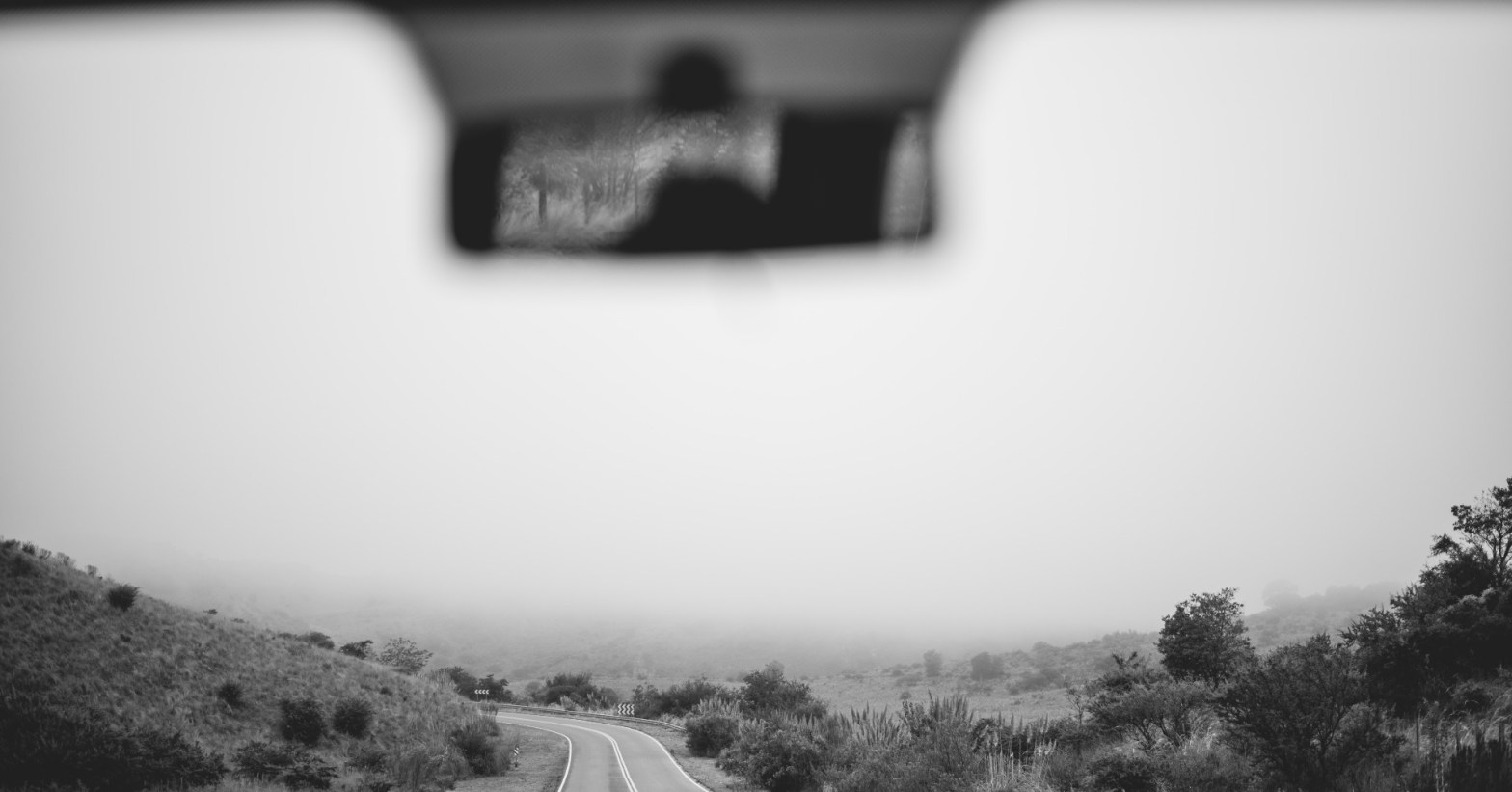
It’s like when you go on a road trip to get somewhere. When you finally get there, you’re tired from the drive, but you’re excited to be there. Then by the end of the trip, you’re homesick. So I’m not at the end of the trip. But I’m already starting to miss home, so to speak.
Is it home in the sense that you were an expert in one thing, and now you’re trying to develop that same level of competency with a different topic?
Exactly. Yeah. I’m a bit of a novice in some ways.
In terms of mourning, do you miss your environment at all? Your colleagues?
I miss the environment in terms of the subject matter.
But not in terms of the actual physical environment?
I miss that too. Absolutely. There are many things that I miss that I never would have never imagined I would miss…jokes that people make, halls you walk down, rooms you enter, tools that you use. Just feeling an overall certain level of comfort. There are definitely physical aspects that generate that level of comfort.
But I obviously became very comfortable with my previous subject matter, too. There’s a lot known about my previous subject matter, and I came to understand a lot of it. There’s also a lot known about my new subject matter, and I understand very little of it. So it’s exciting because there’s a lot to learn. But it’s also uncomfortable because I’m making predictions and designing experiments that need to be informative and insightful and impactful, and I don’t know enough about the subject matter yet.
Do you find that you are a personality that thrives in situations when you are really forced to grind up against your boundaries educationally and personally?
I don’t really know the set of circumstances within which I thrive. I have a lot of fun trying to come up with creative ideas, and often when you’re at the periphery of what’s known about something, you’re forced to come up with really clever experiments. Most of the simple ideas you come up with have already been done, so you have to be really clever. And that’s a lot of fun. Being up against the boundary of knowledge is fun.
___
This interview has been edited and condensed for length and clarity.
Note: This was a 500-word Q&A assignment for a Storytelling and Narrative course.
 Arisa Valyear